Welcome to WordPress. This is your first post. Edit or delete it, then start writing!
Still Alpine friends
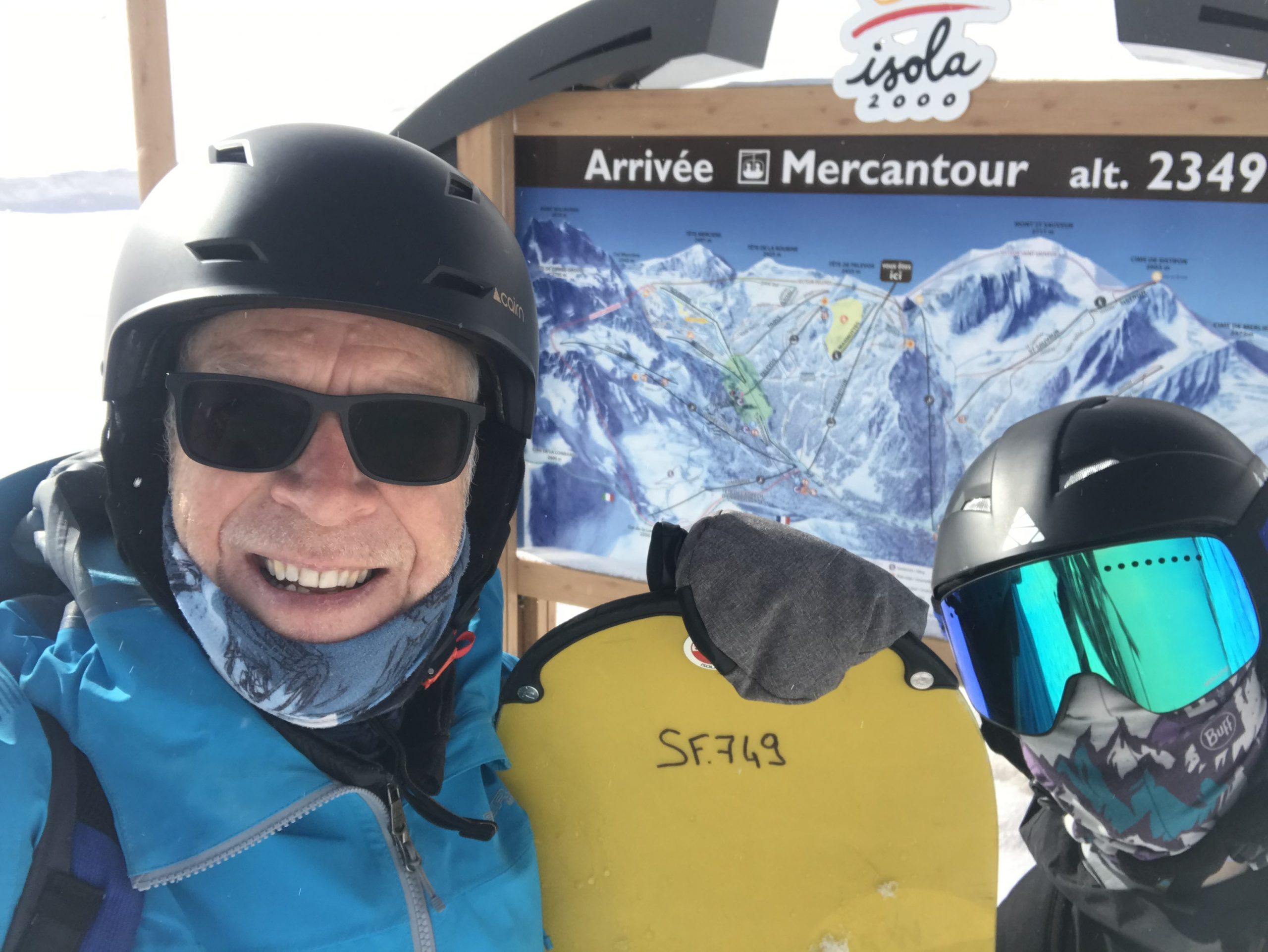
Providence, in the shape of an extended ski season and a bit of spare cash, allowed me and my son the opportunity of a trip to the French Alps together.
Great though the opportunity was there is still a dynamic between a fifteen-year-old and his father which doesn’t always spell harmony and it was with a degree of both trepidation and excitement that I looked towards the trip.
With his incredible skills of being able to navigate the internet, my son had come up with a tight-knit plan to get us there cheaply and effectively and also a superb place to stay the likes of which I don’t think I could ever have achieved!

The plan worked and we arrived at the resort on time and checked in to our apartment. Day 2 we had to get ski ing and this is where things started to go slightly awry as I could no longer bear to wear ski boots.
I had two options a) Sit around and do nothing b) snowboard (something at which I am self-taught and haven’t done for 20 years).
Choosing option ‘b’ I soon found myself sitting on the slope with the snowboard in front of me too scared to set off. This is where roles definitely reversed and after a quick piece of ‘coaching’ I found myself making a passable attempt at said sport.

This hurdle overcome, the next day presented a challenge in that it was raining and not snowing. All my worst nightmares seemed to be becoming true and the thought of being trapped in a small apartment with just the two of us and nothing to do seemed all too real.
However, after a brief chat with Mum back at GHQ I was reminded of the management mantra of all trips or get-togethers – ‘Form, Storm, Norm, Perform’ and that this was literally the Storm phase so I arranged for us to take the local bus down the mountain to the local swimming pool which ended up being a real game changer.
Returning from the pool gave me time to reflect on the real aim of the trip and I realised that it wasn’t about skiing per se or even some sort of cheesy ‘bonding’ experience.
My son and I have a perfectly good relationship and we are a very close family but, it was about ensuring that we came back with our friendship intact – which is the first rule of Alpine climbing and something I have written about before, but not something I had thought to apply to this situation.

Explaining the idea to my son he was very receptive to the notion and especially the fact that this simple rule carries with it so much other stuff about patience, understanding, care, consideration, respect and many other things (Norming)
As if someone up above had been listening the next day we awoke to fresh snow and sunshine and for the next two days we skied ourselves silly (Performing) before returning our kit, jumping on the bus and making it home in the early hours of the next day refreshed and excited with stories to tell and a new level of understanding and friendship between us.
You can read the original article here.
Yoga is a union we should all be part of
“You don’t get me, I’m part of the union…” So said the Strawbs in their hit single in 1973. Hippie songs to one side what’s this got to do with anything?
Well, have you ever wondered what the word ‘yoga’ means – apart from ‘struggle to bend in strange directions whilst being simultaneously humiliated by others in the class’?
The nearest description is that of ‘union’ and the union that is being described is that of body, breath and mind which can sometimes help to put the struggles into perspective, but have you ever wondered if you could carry the concept elsewhere?
Apart from being a keen walker and yoga practitioner, I am also an enthusiastic cyclist and swimmer. I am at an age where the words ‘non-load bearing’ are taking on a new-found significance.
Swimming is an interesting occupation. At one time I was training for triathlons, and I had a simple imperative – ‘train hard or look a fool on the day’. I no longer compete due to ankle injuries and a slight degree of boredom (?) but I like to keep my fitness levels up and make sure I can still swim the requisite 1500m Olympic tri distance.
Apart from the mantra that ‘this could help if I fell off a ferry’, I struggled with motivation – until I thought about accessing ‘the union’.
On my worst days, yoga seemed like a lot of painful postures (asanas) which if I could get through would be rewarded at the end with a nice lay down (savasana or the corpse pose).
Dull flog

What changed my thinking was when someone pointed out that in some yoga circles savasana is seen as the hardest pose to master and that every asana during the practice was simply preparing you for it.
This was quite a revelation for me and changed the way I viewed my yoga (for the better). I wondered if it could also help stop my requisite 45/46 lengths of my local 33.3m pool from feeling like the dull flog it was becoming.
Following my yoga lesson routine, I decided to divide the swim into four 12-length blocks. 400m seemed like a nice round number and x 4 got me well over the 1500m mark and to a mile. Very neat.
The first block I use as a warmup just to reacquaint myself with being in the water and to get my breathing and mind under control. I then do a stretching routine, which is borrowed from my yoga class and is much easier in water.
Other swimmers seem to have acclimatised to my gyrations and a few have asked if it is beneficial, but no one has sought to join me – yet.
In the second block I like to marvel at how after a stretch, a breather and a mind reset how much more fluid my stroke is whilst also trying to swim with as few strokes as possible and keeping my mind on the number of lengths.
My punishment for forgetting is to make myself go back to the last pair I remember doing. Tough I know but everyone likes a bit of self-flagellation now and then – or so I’ve heard.
Creative ideas
Block 3, I get my float out and practice deconstructing my stroke using either just arms, just one arm or kicking hard with just legs. It is amazing how much this wakes the body up especially your legs and weaker arm.
If you ever fancy taking this a little further, then book a swim analysis, ideally one in which you are filmed. Often what you think you are doing is very different to what you are actually doing and re-educating your limbs can be an interesting piece of mental development!
From there I proceed to Block 4 in which my aim is to swim as ‘silently’ as possible whereby my stroke is as efficient as possible rather than fast.
My aim on the last two lengths is to make sure that everything is working as effectively as possible and that I am nearing that meeting of a body working as I want, my breathing being long and relaxed and my mind being quiet, forgiving, calm and focused on my strokes and number of lengths.
Job done, I get out, smile and say a small “Namaste” that I am fortunate to have the time, pool access and health to do all this. I then cycle home and whatever happens, I feel blissfully reassured that ‘you can’t get me…’
- As a postscript, I would mention that I swim front crawl and always breathe bi-laterally.
- As a post, postscript, I also have most of my best ideas while swimming.
Can walking help to restore your own mind to ‘factory settings’?
I once wrote a book. To my great delight it was very successful running to two editions and being sold all over the world and in numerous languages.

What always surprised me though were the positive messages I received.
One young man called Tomas from Slovakia wrote to tell me that he read the book everyday at the bus stop and many teachers told me that they kept a copy on them at all times to dip into when needed.
I too have a book that I use the same way. It’s called ‘Quiet the Mind’ written and illustrated by Matthew Johnstone, and I go to it on a regular basis.
It is basically a book on Meditation but it has a number of real positives for me. It is short, instructive, humorous and brilliantly illustrated.

It is the introduction that I love the most. It describes what it is that can make us so gloomy explaining the fact that the brain never stops working doing what it does; thinking, 24/7 – even when we are asleep.
He describes how a lot of this thinking is dominated by our ‘eternal internal dialogue’ which, if left unchecked can turn to the dark side which is often loudest at night time.
These dark side thoughts can be more persuasive and dominant than the positive supportive kind of thoughts and may become:
1) Obsessive
2) Intrusive
3) Stuck
4) Repetitive
This is largely due to the fact that within our ‘mental library’ there is a huge section dedicated solely to:
- Complaints
- Woes
- Fears
- Regrets
- Hurts
Just like a computer your memory starts to fill with junk making it hard to concentrate or recall basic information. This kind of thinking leads to stress, anxiety then depression and eventually burnout. So what is the solution? Here is my top 10 list…
1) Do some Yoga, meditate (or learn to)
2) Remind yourself to breathe and observe that process
3) Do something to help others, cook someone a meal and get out of yourself
4) Do some form of exercise, get out in nature, dig the garden, plant some flowers
5) Dance, sing, make or listen to music
6) Phone a friend or arrange to meet up, preferably with someone you find positive and uplifting
7) Buy a copy of ‘Quiet the Mind’ and read it
8) Look through your old photos and write a list of the things you can be grateful for
9) Hug someone (you know) or even hug yourself, pat a dog, stroke a cat, hug a tree
10) Write a list of five new goals that make you grin e.g. to climb a mountain, to visit a city, to go to a pub
The best bit of the book for me though is the very first section which tells us about our ‘natural state’. The author does this with the use of a brilliant analogy which suggests that ‘behind the doors of our mind lies a city’.
In that city he suggests are a number of things just for you, such as cinemas screening any film you want, art galleries that are always open for inspiration, libraries full of memories and future plans, parks where the mind can roam free and vast factories where dreams and creativity are made.
Then most crucially the reminder that this city is a place where love, warmth and joy can abound (and this is our natural state).
After reading that bit I tend to always register a big ‘Oh, yeah, I had forgotten about that’. It’s a bit like reminding some adults that a child’s natural default is to be happy and to play.
So remember that these are your ‘factory settings’ and that being unhappy or depressed is an aberration from that and that the ‘reset button’ is out there and it’s largely free!
Can Alpine Climbing teach us something about relationships?
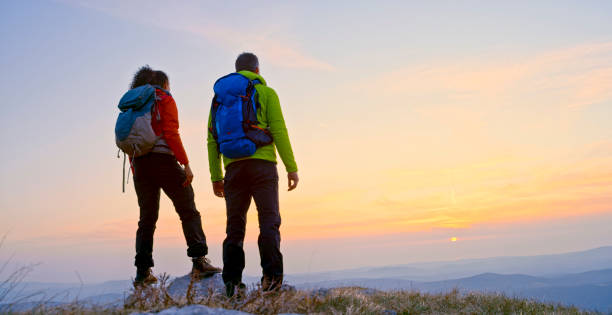
In Alpine Climbing the primary aim is to ‘always come down or descend as friends’.
Anyone who has seen Brad Pitt in the role of Heinrich Harrer in the mountain scenes of ‘Seven Years in Tibet’ will know how not to do this!

Whilst it sounds like a really simple notion it is in fact a loaded statement and comes with a lot of other ideas.
So what is Alpine Climbing specifically and how does it vary from other types of climbing or mountaineering? Wikipedia provides a useful definition:
‘Alpine style is mountaineering in a self-sufficient manner, thereby carrying all of one’s food, shelter and equipment as one climbs, as opposed to expedition style (or siege style) mountaineering which involves setting up a fixed line of stocked camps on the mountain which can be accessed at one’s leisure’.
Sound familiar? Yes it’s just like being in a relationship or marriage – especially when you have children thrown into the mix!
So what can Alpine climbing teach us about relationships?
- Life is a mountain
- You can either view it as an adventure or a chore
- Reminding yourself of the life changing ‘view’ from the top is what it is all about
- The better you communicate with your partner the stronger the rope between you becomes.
- A fully functioning relationship between the ‘lead climbers’ is paramount for the success of the other people in your life
- It is vital to contemplate and discuss what peak you are climbing and where it leads
- Remember that when the storms come is when your skill and training kick in
- Having what you need on the climb is essential
- Always maintain a sense of respect for your partner’s skills
- Keep Voltaire in mind – ‘Life is a shipwreck, but we must remember to keep singing in the lifeboats’
- Keep singing!
Life itself can be seen to be the ‘mountain’.
Seeing it as a long climb can be useful but only if you see it as an adventure and that by sticking together you might eventually stand on the top and admire an incredible view – possibly one denied to those who didn’t keep just putting one foot in front of the other (no guarantees though!).

Alpine climbing at it’s purest is beautifully illustrated in Joe Simpson’s amazing book, and subsequent film, ‘Touching the Void’. https://g.co/kgs/KHVuko.
At a distance one would assume that Joe and his partner, Simon Yates must have fallen out for Simon to cut the rope whilst trying to lower an injured Joe down the mountain.
In fact he only he did so because he had tried everything to get him down and if he had continued then they would have both fallen to their deaths. (If you haven’t read the book, Joe survived the fall and fully agreed with Simon’s choice of action in cutting the rope).
So what is the key to a successful climbing partnership?
The answer is trust. For trust to exist between climbers there must be constant open and honest communication as well as belief in the other’s technical ability and their capacity to keep you safe – and unlike Heinrich remembering to sometimes put your own ego and desires to one side!
Communicate
So when thinking about your life together, rather than seeing yourselves as two lonely people wandering about lost on a windswept moor, how about reimagining yourselves as a fit and enthusiastic climbing partnership taking on an incredible adventure with all the resilience and equipment needed to survive and thrive?
Maybe, the next conversation on ‘date night’ could be about all the things you need from each other to strengthen your partnership so that when the metaphorical weather turns bad, or potential disaster strikes, you have what it takes to carry on.
In Charles Dickens’ ‘David Copperfield’ his dying wife Dora states that ‘there can be no disparity in a marriage like unsuitability of mind and purpose’.
To my mind there must also be an opposite to this – that there can be nothing better than a commonality of mind and purpose.
So how do you achieve that?
By communicating. You need to allow each other the freedom to be vulnerable and to express your wildest dreams and deepest fears. Some people avoid doing this for fear you’ll find out you don’t share similar goals. However, you also won’t find out what you have in common or how to overcome your differences if you don’t share.
Like the wind external factors such as children can get between you. They may weaken the rope and threaten to pull one or both of you over. The best way to stop this is to reaffirm your chosen route.
Sometimes the ‘peak’ we think we are striving for is not the one that matters.
So the final question has to be – how do you identify the peak you are aiming for?
Sadly, I think that due to years of conditioning many of us assume that things like paying off the mortgage, putting the kids through Uni or retiring with the pension intact is what it is about. In fact it can be the much smaller things that matter.
Things such as still being able to hold hands walking through the park, having a cup of tea and chatting in bed, giving the father/mother of the bride/groom speech you always dreamed of and so it goes on.
One of the reasons that some people climb, despite the obvious dangers, is that it makes them feel ‘alive’. Maybe you could use that to guide your thinking as only you will know what makes you feel that way.
In defence of wellies and brollies
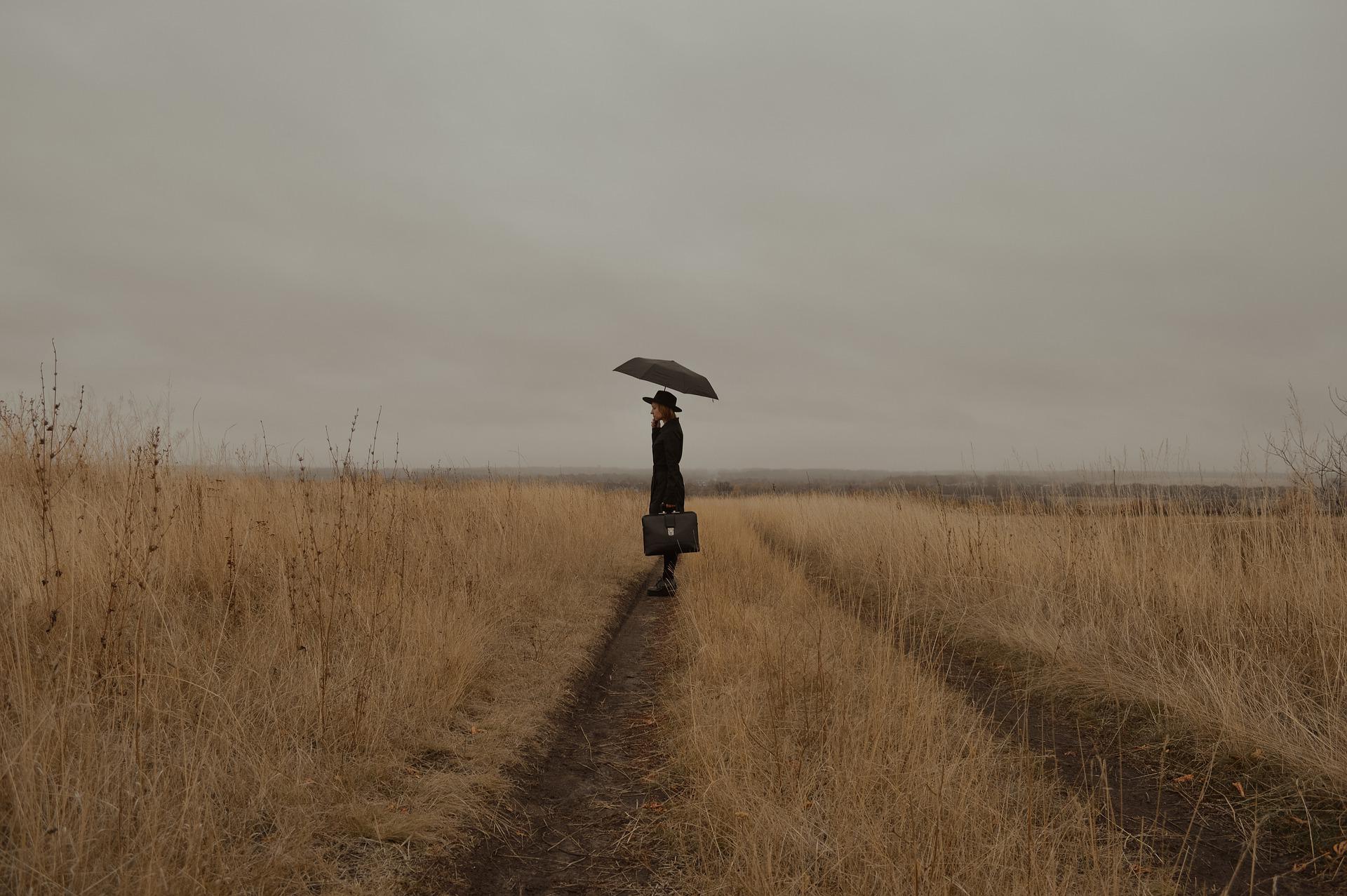
There seems to be a general consensus that to go walking you must wear big, heavy boots and only use a jacket to keep you dry. Wellies are for kids, farmers and horse riders and umbrellas are for use in a strictly urban context, or so the thinking seems to go.
And yet Nicholas Crane – explorer, TV presenter and author always takes his trusted umbrella on his expeditions and often points out the multiplicity of its uses in some of his books.

This was brought home to me recently when I facilitated a corporate walk and one of the attendees, a seasoned walker, turned up in wellies and with good reason here in the clay soiled and muddy Ouse River valley.
Wellies do have some obvious downsides however that limit their use; they have poor grip on wet rock, next to no support and can be very hot and sweaty in the heat or cold and clammy in the cool.
Even so, the quality of wellies (invented in 1852 when one Hiram Hutchinson met a Mr. Goodyear) is becoming ever better – and with that more expensive.
Given they are easy to put on and take off, keep the bottoms of your trousers clean and dry, and can be hosed clean, there is much to recommend walking in them – just not too far or too high!
With an umbrella, we always tend to assume that they are only for keeping you dry when you are out and about in town. However, they can be extremely useful in the great outdoors when perhaps you want to stop and eat and keep your food dry, open your bag, check your phone, or open out a map (without a case).
They can also be a good form of defence if it comes to it. Look at what Indiana Jones’ dad was able to do in the bird-scaring scene from ‘Indiana Jones and the Last Crusade’!
They can also be a lifesaver for keeping you cool when it is hot and much like wellies there are now some very adaptable and incredibly small ones available.

It is also worth noting that I have found that gore tex waterproofs don’t work as well in the tropics, so an umbrella can be really useful when trekking in the rainy season.
As most of us don’t trek regularly in the tropics however it is probably always worth having one for that very British possibility of being ‘caught out’ when typically we have four seasons in one day.
- Always take a number of fold away umbrellas with you if you are leading a group or taking out a family. You will be star of the show if it becomes either too hot or too wet.
- If you are keen to make sure that you get out (and don’t use the weather as an excuse) then invest in some decent wellies, which will prompt you to go regardless of the conditions. Who knows you may find yourself splashing in puddles as you did when you were a toddler.
- Read as many of Nicholas Crane’s books as possible. He has always been a major inspiration for me.
- Ignore what others say and take what it requires to keep you and your co walkers warm, dry and happy.
- Go for a lovely walk and then come home and watch (or re watch) ‘Indiana Jones and the Last Crusade’ with a nice cup of tea and a piece of cake for umbrella defence training techniques.
Tell me why no one likes Mondays… ways to motivate yourself.
Apparently one of the reasons that we don’t stick to New Year’s resolutions is the fact that we make them at the wrong time of year and in the wrong state of mind.
It’s dark and gloomy outside, the festive season has been and gone, you probably eat, drank, and spent too much and all there is to look forward to is the long dark, joyless months of January and February.
What kind of resolutions do we make in that state? Ones driven by guilt and designed to remedy overindulgence I would wager.

I am inclined to think that Mondays are very similar.
So often we sit ourselves down at the desk after an enjoyable weekend and resolutely begin our ‘to do’ list. How long is it then before we find ourselves staring out of the window or scrolling through social media looking for inspiration?
Is there another way?
I definitely think so and here are my top tips to help.
1. Give up on ‘to do’ lists. Use ‘to done’ lists instead i.e., at the end of the day write down everything you did (no matter how big or small) and then draw a very satisfying line through each one.
2. Use the ‘tough nut option’. Put the meeting that you are least looking forward to in your diary for first thing Monday morning. Hard though it may seem it will certainly wake you up, even if it is painfully so and once it is over, the rest of the week will look golden in comparison.
3. Don’t start your week at the desk. Get out and exercise preferably with something like a walk or even a swim or possibly a yoga/Pilates class. This will fire up your neurons and never fail to give you a fresh perspective. It was a strategy favoured by everyone from Charles Dickens to Steve Jobs.
4. Use the ‘Test/Reward’ strategy. Go through your diary for the week ahead and block out some time to ‘Reward’ yourself first. Once you’ve done this, then work backwards to find the ‘Test’ slots that you’ll reward yourself for, this could be things like a difficult meeting, finishing a report or updating your website. This is very counterintuitive to how we have been taught to act so don’t worry if it makes you feel uncomfortable at first.
5. Stay light. Keeping the endorphins flowing and a bigger sense of possibility alive is vital so don’t sit there in silence. Put on some music, sing and dance abit and maybe mind map your ideas. This helps access that deliciously creative right hemisphere of the brain rather than the dull old sequential logical left hemisphere.
6. Stay flexible. All good plans in my book are D.I.M – Demanding, Imaginative and Moveable. If a good opportunity pops up then take it and move things around to suit and make Wednesday’s ‘Test’ Friday’s instead.
7. Remind yourself how well you are doing, enjoy your achievements as well as your plans. Spend some time reading or thinking back to what you have achieved in the last week, month or even the past year.
8. Make Friday the new Monday. Plan your week ahead on Friday afternoon or perhaps Saturday morning when you have a bit more time and you have moreenergy.
9. Remember you are human. Make sure you take time to be a ‘human being’ and not just a ‘human doing’, save time in your life for things outside of work, your partner, children, friends, or self-care.
10.Don’t beat yourself up if things don’t go to plan. Sometimes you get loads done and sometimes you don’t, that’s life.
Here at Best Foot Forward, I tend to play around with a strapline or mantra of ‘Walk, Talk, Dream’ and then words like ‘Plan, Do, Act’ which I use to get me motivated.
If you’d like further help with Monday motivation to help with planning or getting things done, or even deciding your New Year resolutions then drop me a line.
Listen to your stomach… and the Army

There has always seemed to be a myriad of sayings attached to the Army and walking but probably the best known is Napoleon’s assertion that ‘An army marches on its stomach’.
As someone who likes his food and can easily get ‘hangry’, hunger induced anger, I always bear this in mind for myself and others, wherever I am going.
One of my more home-based favourite sayings though is that ‘any fool can be uncomfortable’.
Too often it has been my experience that people have been put off walking, camping or the outdoors after having a miserable time as a result of going out without enough to keep them happy and comfortable, seemingly under the idea that all adventure has to be about suffering for it to be an adventure.
Personally, I have never subscribed to that notion.
As a small boy I once made myself some homemade bike panniers from a couple of boxes, packed a blanket and some cream crackers with marmalade (a favourite of mine at the time) and decided I was going to have an adventure.
After leaving my parents a note early in the morning to tell them that I had set off and wasn’t sure when I was coming back. I then pedalled off down the road until I reached the point where the countryside started (all of about half a mile).
Stopping there, I spread out my rug and sat down to eat my crackers feeling very pleased with myself on the successful completion of my mini adventure. Returning home a little later, the note was still there and whilst I completed many greater adventures later in life, the sense of complete independence and happiness from that initial trip never left me.
Never leave home without these things
Today there are certain things that I never leave home without.
The must have items are a rucksack, some water, a waterproof and, depending on the weather, some sort of head covering. Head coverings can include an umbrella, which can also make a very good temporary sunshade.
My second ‘go to item’ is something to sit on and for this I have three items:
- a small waterproof sitting mat
- a small collapsible stool
- the much derided but always used tartan rug (with a waterproof bottom)
Of course, it’s not always necessary to take all these items together. The rug is more than adequate for most journeys, especially if I’m walking with others.
Upon taking a break, two of things that always get laid out with me are:
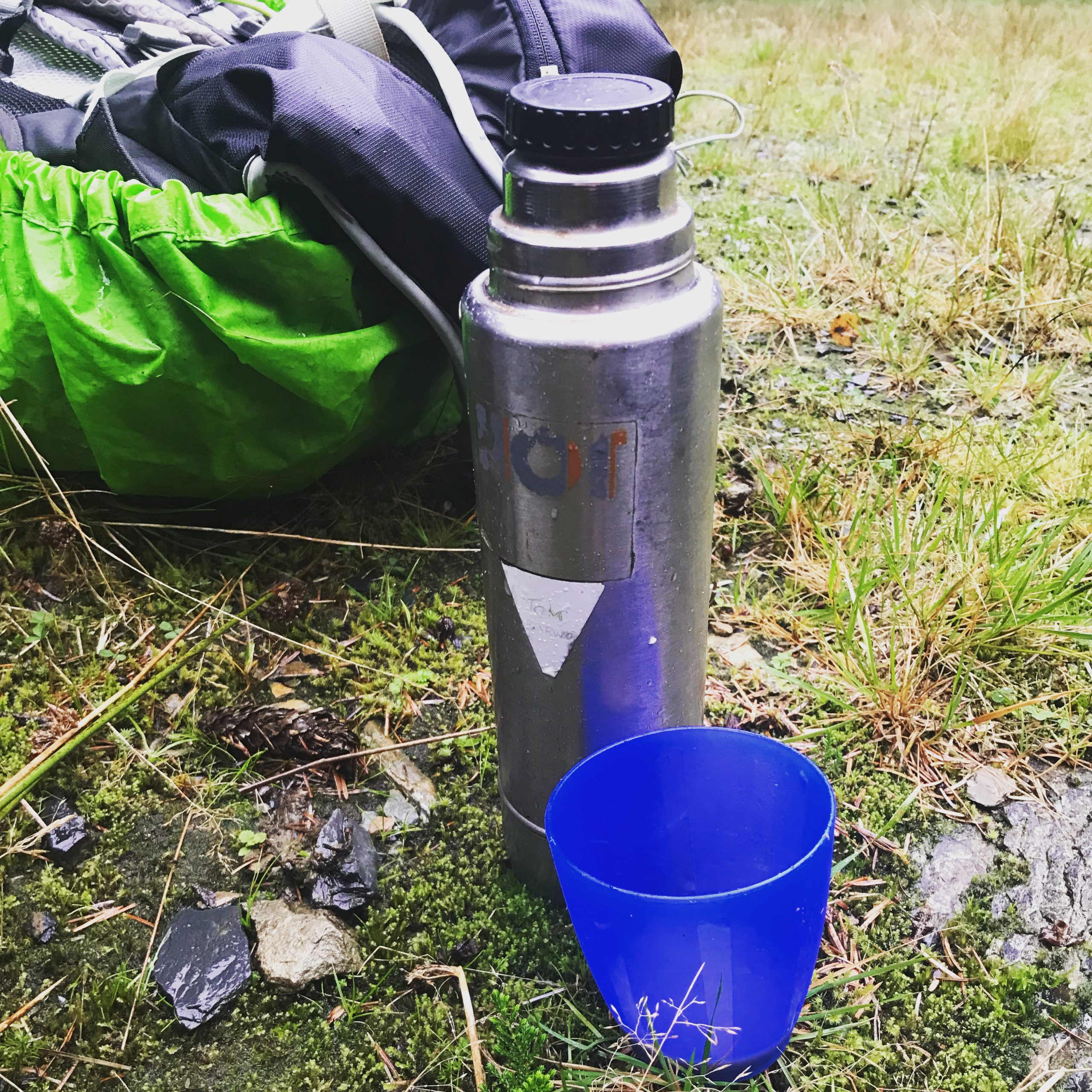
- My trusty thermos flask. I prefer stainless steel ones, as I find them easier to transport and less likely to break. I even take two sometimes; one with (good) coffee for the morning stop and one with tea for the afternoon.
- Cake or biscuits – the perfect accompaniment to tea and coffee. My wife and daughter both love to bake and my son has almost perfected his chocolate muffins, so I am spoiled for choice. I also have a friend who refuses to join me on a ramble unless I bring what he calls my wife’s ‘weapons grade flapjack’.
Never underestimate the power of food and drink on a walk, and not just from a survival point of view.
When I was travelling in New Zealand, my brother sent me a mini hamper from Fortnum and Mason’s. I took the contents with me on a walking trip to the Mt. Angelus national park and was amazed at how much everyone looked forward to something from the box when I shared my goodies each night.
As a note of warning, whilst it is useful to have a few sweets to keep you and others going, especially children, don’t overdo it. The only cases of ‘walking illness’ I’ve had to deal with is from students eating too many sweets on their Duke of Edinburgh expeditions.
Another nifty invention which I take on a winter walk is a survival shelter, or as they are more commonly known, a bothy bag.
Despite the grand sounding name it is simply a large piece of nylon (like a small parachute with no hole in). Everyone forms a circle and puts the nylon over their backs and under their bums. You then all sit down to pin the cover down and then your heads form the poles.
What is really surprising is how quickly the space warms up just using body heat. The only problem can be to convince people to get out when it is time to leave.
British Army magic
I started my teaching career in a very traditional boys independent school which, having only attended very average state schools myself, I found it quite a fascinating experience especially the importance given to the Combined Cadet Force (CCF) and the fact that it was run by a real Regimental Sergeant Major (RSM).
One of his great ‘starter lessons’ with the new students, was to talk about the value of ration packs in making the British Army so effective.
He would stand there with two boxes, one of supposed U.S. Army rations and one of British. Taking everything out of the first box (the U.S. one) he’d point out how useless all of it was.
He’d then start dipping into the British box and pull out an ever increasing range of items, which he warmly praised as extremely useful and a marvel of British ingenuity. To the increasing amazement of the new recruits, he pulled out an impossibly large number of items from this tiny box, like some sort of military Mary Poppins with a carpet bag.
Unbeknown to the assembled audience, the RSM had prepared a hole in the ground beneath the British box to conceal these extra items.
So, next time you head out, make sure you think of what it will take to keep you happy and pack according to where you are going and who you are going with.
To be Frank, my history with mindful walking

Back in the early 90s I quit my glamorous job in advertising and set off to go travelling, little did I know that it would lead me to many things including mindful walking. I use the word glamorous somewhat ironically; everyone thought the world of advertising was but I had come to realise that it wasn’t.
Making my way down through Thailand, Malaysia and Singapore I found myself in Jakarta, the capital of Indonesia and it was here that I met Frank the German Buddhist (his name was Frank, and he was German!), who would introduce me to mindful walking.
‘Met’ is not quite the word either. I had decided that I was going to take myself off to the swimming pool that had been built in Jakarta for the Pan Asian games a few years earlier and Frank had rather brusquely invited himself along.
Frank didn’t endear himself to me very much on the journey there as he operated on a ‘need to know’ basis i.e. he talked constantly telling you what he thought you needed to know either about the world or yourself without any request for such.
The pool was big, the swimming was good and the effort of getting over there seemed worthwhile.
Frank was a reasonable swimmer so I could see why he wanted to come but long before the session ended I observed him walking very slowly round the edge of the pool. When I questioned him later on what he was doing he told me it was “mindful walking”, a Buddhist meditation technique.
Being a person with ‘things to do, people to see, no time to waste’ I found this notion faintly ridiculous.
We returned to the hostel in a taxi with Frank still maintaining the general stance – that he had done me a big favour by muscling in on my trip rather than politely thanking me for the opportunity and then capped it off by telling me somewhat aggressively that I looked at my watch too often.
‘No wonder,’ I thought, ‘I have things to do, unlike you…’
Broken watch
Bizarrely, the watch I had at the time fell off my wrist the next day and smashed on the floor. From there on I didn’t wear or use another one for nearly the next three years but that’s another story.
Fast forward a few years and I am back in the UK (wearing a watch) having retrained to teach, working in a school in Northampton and getting to grips with the practice of exam invigilation.
Oh my, what a drag it was.

A whole 50-minute period, in which chatting to your colleagues is strictly forbidden and the only excitement is to hand out a bit more paper or escort a student to the toilet. Eventually the race to be the first there with the extra paper or to be the one who says, “You have 15 minutes left” became a bit heated.
In this state of truly hysterical boredom I began to wonder what to do. Slowly my mind drifted back to a swimming pool in Jakarta and I thought ‘what the hell’ and so I set off walking up and down the long lines of exam tables in the sports hall as slowly as I could.
To be fair to Frank, walking really slowly and purposefully without falling over is quite hard work and takes a lot of concentration but I was amazed at how the time started to disappear when I engaged in this new strange activity.
As the exam season wore on, so my practice increased and eventually I was aiming for one full up and down of the whole hall in the single period.
Toilet paper
Requests for more paper and the toilet were now real irritations as they disrupted my flow and I certainly made it clear from the look in my eye that I expected my colleagues to do the job and leave me in peace.
What happened next is what surprised me the most though; some of my students asked me what I was doing and why I was doing it.
I explained the story to them and to my surprise they were really intrigued. Some even said they enjoyed me invigilating as my calm pace made them feel more relaxed. Before long I was getting small nods and smiles from students as I walked past their desks, which turned to major grins when I managed to take the whole period to start at one side of the room and finish at the other.
My colleagues found it even more confusing when I started to volunteer to cover their invigilation periods, but my apparent madness won me more than a few returned favours and heartfelt thanks from those with a desperate piece of marking to do.

Today, Mindfulness is now all the rage and seems to permeate every facet of life. For many people I think the concept is something they understand but can’t always find the time or practical application for.
Mindful walking is, to my mind, one of the easiest ways to practise the art whether it be taking time to consciously focus on your surroundings, perform a quick body scan as you walk, think about your breathing or simply trying to walk in a uniform and co-ordinated.
To be frank – it doesn’t really matter as long as you walk with a little bit of purpose and don’t keep looking at your watch.
If you’d like to be ‘Frank’, and learn more about how Mindful Walking may help you, give me a call.